
Bleeding Into Real Life
Philip Fracassi: talking about how the supernatural creeps in

Now it’s my pleasure to share with you a brand new strange little story by Philip Fracassi. Phillip is the author of A Child Alone With Strangers, Boys In the Valley, Gothic, Sacculina, Beneath a Pale Sky, No One Is Safe, and other books. Here, he shares a true story of a dream visitation that turns out to be horrifyingly real.
The Man In Red Flannel
by Phillip Fracassi
When I was very young and newly married to my first wife, we traveled to see her father and stepmother, who lived in rural Indiana, for the holidays.
They had a large house surrounded by acres of land, all of which (especially in December) was purgatorial brown and lifeless—leafless trees bent like deformed stick figures jammed carelessly into muddy earth, icy grass infested with bits of fallen leaves, the sky above gray and hard as the sunless side of a stone. Being from Los Angeles, which is sunny and seventy degrees day-in and day-out, it was like visiting some cold destitute moon, circling in a haphazard orbit around the world we knew so well.
Staying there wasn’t ideal. Her parents were strange in many ways, and oddly tempered. They were comfortable with the cold, and the dark, as were their four young children (half-siblings to my wife, the product of her father’s second marriage). Ergo, their house was an ice box.
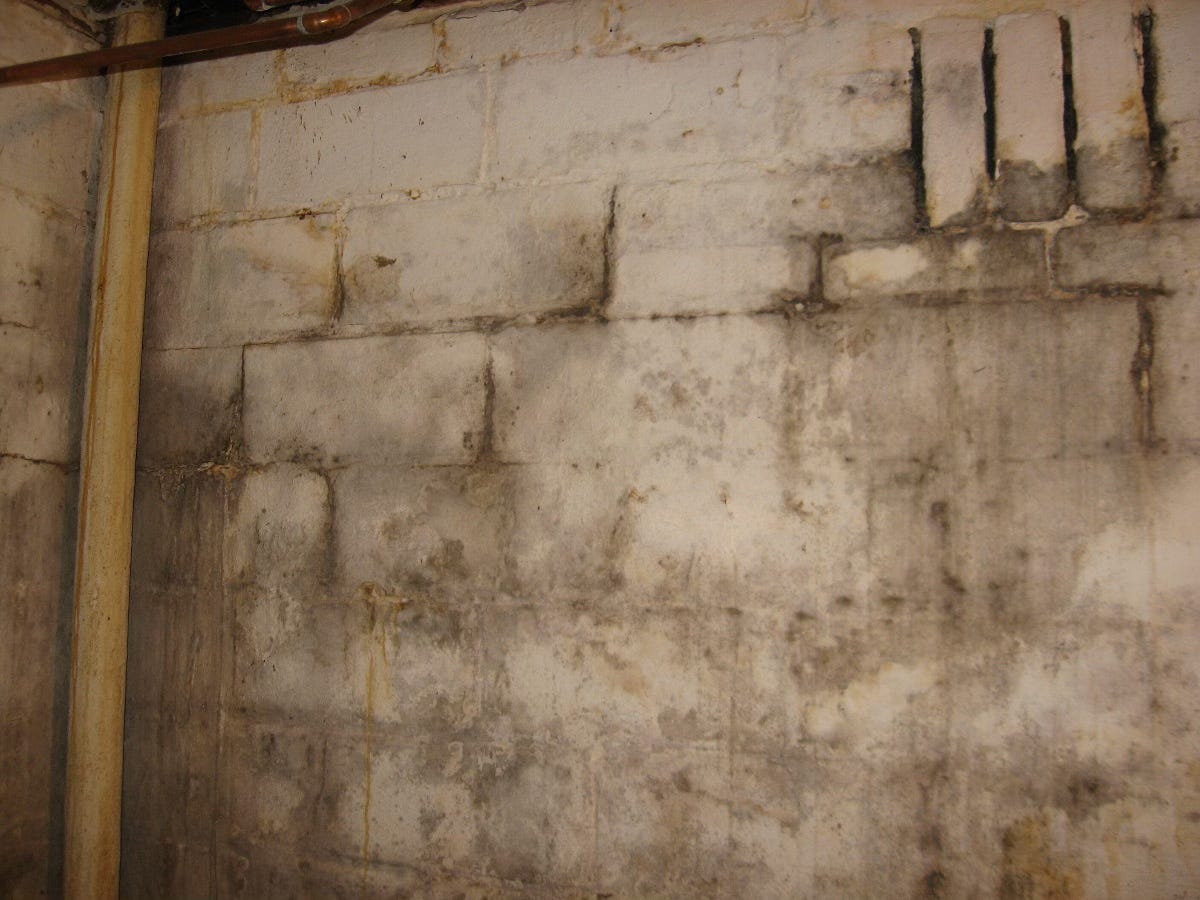
To make matters worse, we were given a “guest room” in the basement. If you know anything of midwestern basements, this one was just as you likely imagine: a “recreational” room for the children occupied most of the space, which was adjacent to the proverbial concrete-walled, shadowy area (complete with spiderwebs in every corner) for knocked-about laundry machines.
The only other occupied area in the subterranean level was, of course, our bedroom. A flimsy door separated our temporary lodgings from the recreational room, which consisted of rust-colored shag carpet, wood-paneled walls, and a dated video game system, complete with an ancient television that had to “warm up” before coming to dull-colored life.
There was also a wooly couch, tweeded with vertical lines of variant browns. The wall behind the couch was the only one without the 70s-style wood paneling. Instead, it was covered with beige, bristly-textured wallpaper that looked a million years old, the only design being a repeating image of a shit-stain-colored fleur-de-lie.
The bedroom was no picnic either. The walls were, inexplicably, painted maroon, and was crowded by dark, oily-looking furniture that belonged in an estate sale for the old and burdened. Rough black carpet crinkled beneath our feet, and the sole closet was barred by shuttered, off-white closet doors that accordioned open and closed on tiny wheels set into shaky tracks. We never attempted to use them in fear they’d pop off completely if we applied the wrong amount of pressure.
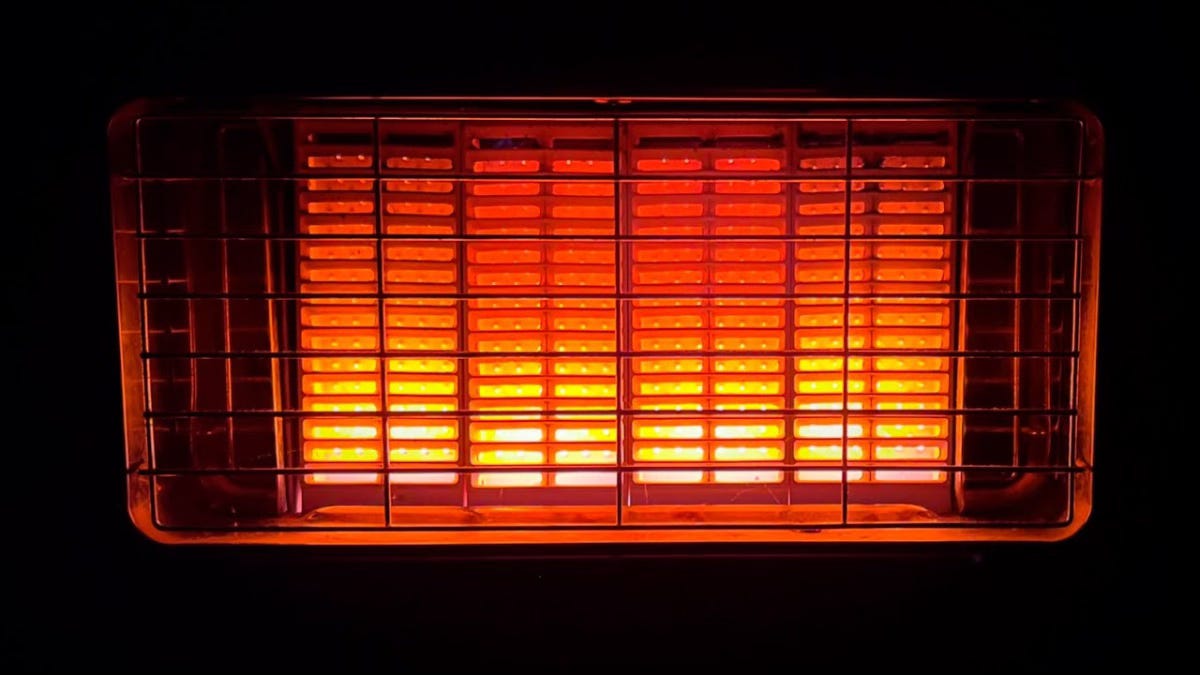
We had a small space heater that was used with abandon. We were going to be stuck in this cold cellar of a room for over a week, and the warm glow of that heater was like a life preserver in the black, icy sea of our holiday stay. At night, we both wore socks and sweats and long-sleeve thermals to bed. Sexy it was not.
If the bedroom door was open, I could only see a portion of the recreation room from my vantage point in the bed. Specifically, the very end of that beige, wooly couch, and a swath of the ugly fleur-de-lie wallpaper. At least, that’s what I could see when the lights out there were on.
When we went to sleep, of course, all the lights were turned off. The bedroom door was closed for privacy (and warmth), and to keep the early-morning noise of the kids playing in the basement, just a few feet from our bedroom, as muted as possible.
I’m not sure which night it was, but I want to say it was early on in our trip... perhaps the second or third night... that I dreamed of the man in the flannel shirt.
In my dream I was asleep in the basement’s cold bedroom. The space heater was on, giving the wall closest to me an eerie, hellish glow. It was one of those strange dreams that seemed quite real because you’re in the same place you were in real life. In this case, I remember waking up (at least, the “dream me” woke up) and feeling disoriented. After a few seconds, I realized where I was, but was still unsettled... confused.
It was nighttime. I knew that for a fact. Which is why I thought it strange that our bedroom door was wide open and—even more strange—that the lights were on in the rec room, the same room where the kids would play their outdated video games, or spread out board games with missing pieces, forgotten instructions.
When I sat up on one elbow, however, I didn’t hear the kids, and something felt off. I looked at my wife, who was still sound asleep. I remember wondering why the door was open, and why the light in the other room was on.
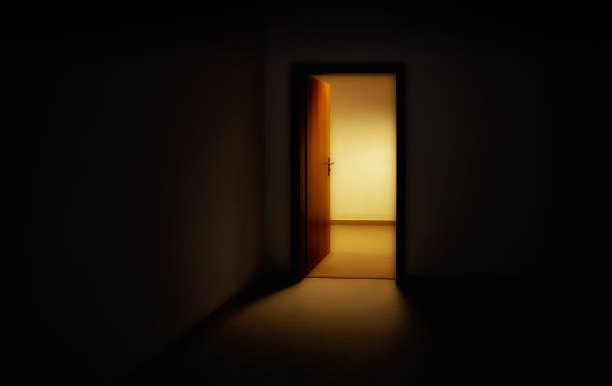
It was then I realized that the light out there wasn’t the stark white overhead light I’d been used to seeing. Instead, the rec room was lit by a lamp with a tan shade. It sat on an end table next to the couch, and gave the room outside our bedroom door a hazy, ethereal quality.
My dream-brain wondered if perhaps one of the boys had come downstairs to watch some late-night television, or if one of the adults needed to do some emergency laundry. Needing to know, and trying to be quiet, I slipped out of bed.
I took a few steps toward the open bedroom door and sort of... leaned... so that my vision moved like a camera on a dolly, the rec room slowly coming into view.
From my new position just the other side of the door, I could see the entire couch and most of the main room. And it was there that I stopped, frozen. A deep chill—the kind you read about in horror books—ran up my spine, and I remember feeling a bone-deep, wide-eyed terror.
Because sitting on the couch, staring straight ahead at nothing, was a man. A stranger.

I clearly recall that he had black hair and pale skin. He looked fit, and young. My age, perhaps (at the time that would be mid-20s). He wore a red flannel shirt, and I noted the crescent of a white undershirt at his throat. The sleeves of the shirt were folded to his forearms. His pants were black and heavy—like work pants—and his feet were sheathed in worn brown boots, the kind you see men who work in construction wearing.
He sat, unmoving, in the middle of the couch. His hands were on his knees, which were slightly spread.
Set between his knees, leaning carelessly against one inner thigh, was a long black rifle. The rifle’s stock rested on the carpet, and the barrel was pointed upwards, aimed at the cottage cheese ceiling.
I took one small step further... and instantly regretted it. The man turned and looked at me. His eyes were green, I think, and he seemed as confused to see me as I was to see him.
Despite my knowledge that this was very much a dream, I still felt a tug of warning. I thought: I shouldn’t be here. This was... I don’t know... private. I instinctively felt that I was invading this man’s space, and that he was upset at my interference. I could feel that plainly.
Then he turned away from me—as if dismissing my presence—and stared straight ahead once more. He took a deep breath, then let it out, then his hands left his knees and gripped the rifle—one coiled around the barrel, the other moved down, toward the trigger.
He tilted the tip of the rifle into his mouth (I distinctively remember hearing the light click of the metal tapping his teeth), slid his thumb against the trigger...
And fired.
His head jerked back as a splash of red blood and bone and meat slapped against the fleur-di-lie wallpaper behind him. The rifle clattered to the carpet, and he sort of slumped, his emptied head drooping, chin-to-chest.
Immediately I woke.... and was freezing. My skin felt like ice. I was shaking, trembling. Panicked. Heart racing, I looked to the bedroom door, but it was closed. The seam at the bottom black.
For a while I just lay there, eyes open, breathing heavily. It was one of the worst nightmares I’d ever had. The space heater had turned off somehow and the room, submerged into the cold earth as it was, felt like a frozen coffin.
Part of me wanted to turn on the heater, warm the air. But to be completely honest, I was too afraid. I didn’t want to leave the bed. Didn’t want to step down onto the carpet.
The man’s face was stuck fast in my head, as fully shaped in my mind as anyone you’d meet in the real world, and that realness terrified me. It was late, I was tired and shaken and not myself... and I couldn’t help but wonder if he was still here, in this basement. In this room. Beneath me, perhaps. In the dark of the half-open closet. Beside me in this very bed.
That last idea was so real that I couldn’t make myself move closer to my wife for comfort. For heat. Instead I laid perfectly still, staring up into darkness, my body stiff as a board, breathing frost into the air. I was too afraid to even reach a hand to her hip, as if I’d feel the brittle fabric of flannel lying next to me.
Morning finally came, and at some point I’d fallen back into a (thankfully) dreamless sleep. When I woke, I could hear the kids arguing in the adjacent room. I checked my watch, saw that it was nearly ten a.m. I’d overslept, and my wife had obviously gotten up, as I was alone in the bedroom.
Feeling tired and a bit embarrassed at how much a nightmare had bothered me, I pulled on a sweatshirt, stuck my feet into slippers, and figured I’d better trudge upstairs and start the day.
In the kitchen at the top of the stairs, I saw my wife sitting at the table having coffee, her father leaning against the counter, going through mail. My mother-in-law was cooking something on the stove. She turned and smiled at me, asked me if I was hungry. I said I was, and would be right back after I used the bathroom, brushed my teeth.
A few minutes later, I was at the table, gnawing on a piece of bacon and drinking black coffee. Things felt better in the light of day, and the caffeine had burned away the haze of sleep well enough that I was feeling rather chipper—comfortable enough to relay the contents of my bizarre nightmare to my wife, while her father and stepmother hovered nearby.
I was kind of laughing about it all as I told her of the man in red flannel, how he’d shot himself on the couch, how real it all seemed and how shaken I’d been... when I happened to look up and notice that both of her parents were staring at me, their faces pale. Her father had a frown on his face, and her stepmother, frankly, looked like she was going to be sick.
After a few seconds, I looked back at both of them in turn. “What?” I said, feeling those icy fingers of dread creep up my spine again.
Her father came to the table and sat down. He set his coffee mug on the table, and looked at me with something akin to anger, or distrust.
“I can’t believe what you just told us,” he said.
“Dad, what’s wrong?” my wife said, feeling the same dread, perhaps, that I was.
He tapped his finger against the kitchen table for a moment, as if debating, then checked the doorway leading to the basement, as if to make sure no children were eavesdropping. He leaned in, and spoke quietly.
“Please don’t mention any of this to the kids,” he began.
I nodded, and he sighed, then continued. “The family we bought the house from,” he said, “were our friends. They’d owned the place for a few years, and were really nice folks. They were a young couple, much younger than us, and lived here with their two girls.”
He looked at me then, and his expression was flat. Scared.
“One night, the father killed himself in the basement,” he said. “He loaded his hunting rifle, put the barrel in his mouth, and blew his brains out.”
Before I could speak, my mother-in-law came over and sat down as well. “When we first looked at the house, you could still see the bloodstain on the paneling,” she said, whispering in a way that made her words hard to hear. “Right behind the couch. That’s why we put wallpaper there... to cover it up.”
My wife’s father sipped his coffee, then looked away, stared at the tabletop. “You described him exactly right,” he said. “Right down to the red flannel shirt.”
He shook his head, and I remember feeling sick.
“He was wearing it the day he died.”
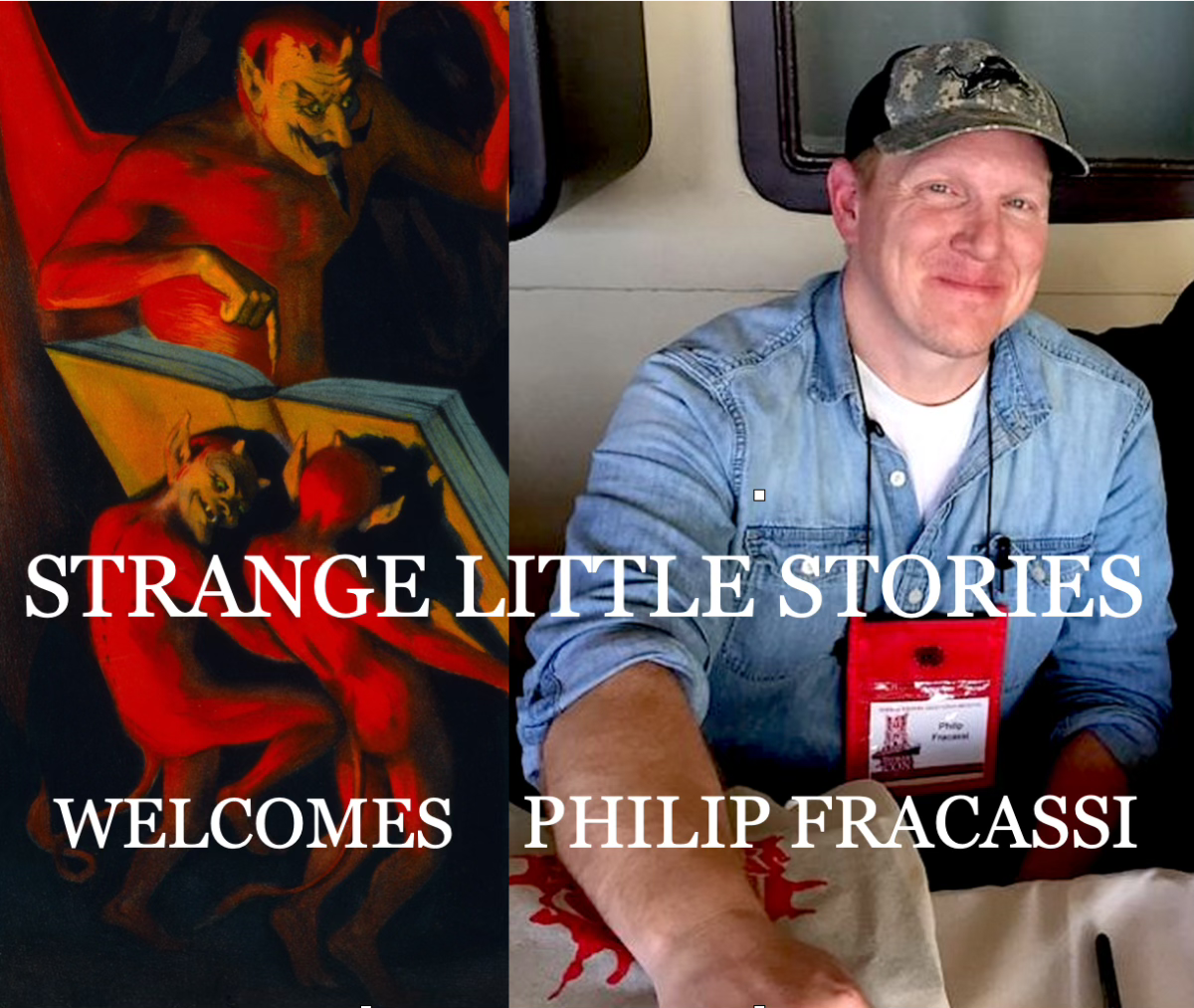
Philip Fracassi is the hardest-working guy in horror––that’s how it looked to me when I started noticing his books as they came out, seemingly one right after another. I’ve always admired writers who are productive, probably because it feels like it takes me so long to finish writing a book. How can he keep it up? I wondered.
As I read Philip’s books––and especially when we started chatting––I understood right away that the reason Philip is so productive is that he’s genuinely and intensely driven to write. His commitment and devotion to his craft is complete, and his love of the horror genre is honest and inspiring.
I was very happy when Philip took time out of his busy schedule to write a story for this issue of SLS, and to carry on a week-long email conversation with me about his story and his writing process. I really enjoyed our conversation––I hope you do too.
DS: Thanks for this strange little story, Phillip. I really loved all the subtle-but-powerful touches, like when you’re trying to sleep after the nightmare and you’re afraid to reach out for your wife because you’re afraid you might feel “the brittle fabric of flannel lying next to me”. Killer line––one of many.
When I asked you if you’d like to write about a real-life experience, about how long did it take you to settle on this one?
PF: This was a profound experience for me, and probably the only thing in my life I can point to with any gravity and say: ‘That was a supernatural occurrence.’
What happened to me, in practical everyday terms, was impossible. So yes, this was immediately what I thought of when you asked about a creepy personal story.
DS: Have you ever tried to write about this experience before?
PF: As far as writing about it before, the answer is no. Not for publication, anyway. I did write down the experience in general, journal-esque terms so I wouldn’t forget details, or about the experience. I found that file of my notes (written over a decade ago) and used it to shape the narrative I sent you.
This happened to me in the late 90s. I was in my 20s at the time—probably around 26, 27 years old.
DS: Really glad you were able to find those notes!
DS: I’m just wondering––it’s such a powerful, unsettling experience you’re describing; why do you think you didn’t try to write about it before (in your fiction)?
PF: I’m not sure why I never wrote a story about it. It just sort of sat amongst hundreds of other ideas in a folder on my desktop, but if I had to guess it was likely because it didn’t have a great arc—meaning, it’s an event, but not really a full-fledged story in my mind. Plus, it really happened, so I think in some ways that put a damper on it for me as a creative piece.
DS: Yeah, that makes sense, about the incident not having a traditional story-arc––although, I have to tell you, the way you wrote it certainly has a lot of narrative tension and drive. “Small” incidents (like this one) can pack quite a punch when a writer knows how to squeeze everything they can out of them. Also, to be fair, you’re doing a lot more here than “just telling us what happened” (meaning, the key event). I’m thinking about the care you take setting up the whole vibe of this “family visit”––the depressing landscape, and the oddly withdrawn and stand-offish behavior of the in-laws. Those things really bring the story to life before you even get to the central/scary incident.
So do you tend to use real-life experiences in your fiction, or not so much? When (and if) you do, how does that usually work for you? I mean, is there a usual way in which the “real” element is transformed (or transforms itself) into fiction?
PF: the answer, for the most part, is no, I don’t. The only exceptions are stories that deal less with the supernatural, and more with mental health, which is an important subject for me and a big part of my life’s history. I have a story called “ID”, which is based on true events (my time in a mental hospital), and my novel Don’t Let Them Get You Down is not based on real events, but it is based on a lot of things I went through in regards to mental health, therapy, and medication. But as far as my genre stuff, no, none of it bleeds into real life, or into my direct experiences.
As it pertains to the mental health stuff transforming into fiction, I suppose the way I transform it is by amplifying what really happened to create a more fantastical story—meaning, a smidge of supernatural, or some exaggerated actions. But the thoughts and ideals are still very real, and very human.
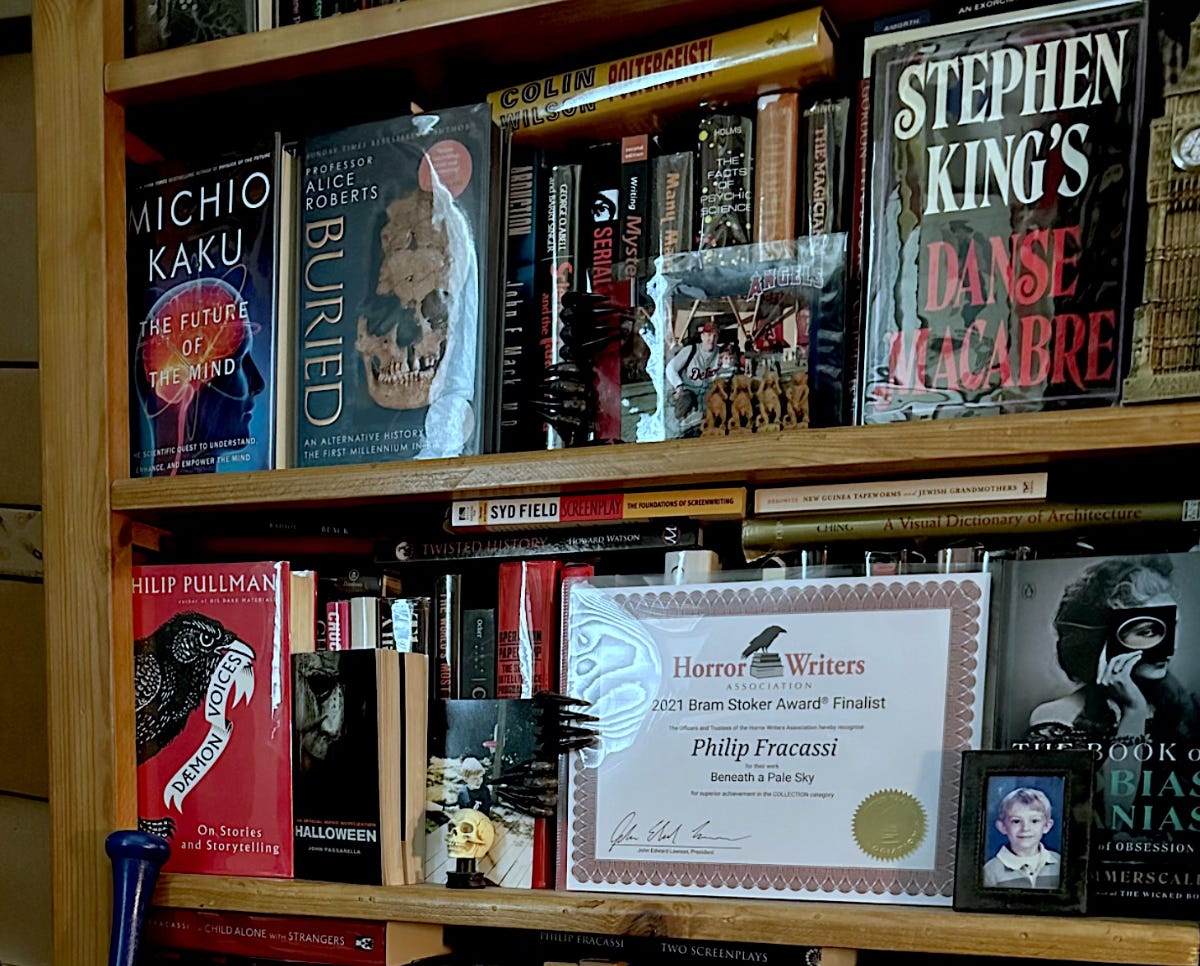
DS: “Amplifying what really happened” is an interesting way of putting it, since some folks say that we’re actually doing that whenever we think we’re simply remembering something “the way it really was”. Like when we go back to a place we haven’t been to for decades and it looks changed, even though it’s not. I think that can happen with actions and events too, so when we consciously decide to “amplify” a particular action or event, maybe we’re catching a wave that’s been rising up for a long time.
I’m really interested in what you say about integrating mental health aspects into your fiction. I know that stigma against mental illness is, unfortunately, a real thing that’s still with us, and needs to be combatted and eliminated. And I’ve also heard some writers and readers express concerns about how mental illness is depicted in some stories, novels, and films, some even saying that it shouldn’t be depicted at all. While the goal of combatting the stigma is a good one, I’m wondering if aspects of that conversation might sometimes clash with some writers’ need to be true to their own experience. Does any of that resonate with you? Do you think it’s possible to integrate mental health aspects into one’s writing––especially horror writing––without raising those concerns?
PF: No, I’m not worried about what other people think should or should not be in my writing. In today’s world, you’re going to offend someone no matter what you write, no matter how careful you are, you unoffensive the story. It’s gotten to the point where people being angry or offended is an assumed response by a portion of folks who read your work. It’s literally inevitable. So I’ve tuned all that out long ago.
If I want to speak to my own life experiences in my work, that’s my call and no one else’s.
DS: Absolutely. I’m with you on that.
If you don’t mind, I’d like to return to something you said earlier about “amplifying” real-life events––”I suppose the way I transform it is by amplifying what really happened to create a more fantastical story—meaning, a smidge of supernatural, or some exaggerated actions.” I know that sometimes when I’m writing a story, I may start out intending for something supernatural or fantastical to happen, but the deeper I go into the story, the less I feel the need for that, and the supernatural element ends up being a lot more subtle, or at least different than I’d planned. (Of course, sometimes it can go the other way too!) Does that ever happen to you?
PF: Good question... I don’t have a great answer.
Typically my novels are intensely outlined, so I know ahead of time what’s going to happen, supernatural or otherwise.
That said, when I wrote my most recent novel, I was not intending to have any supernatural elements. It was going to be 100% grounded in reality... but as I started working my way through the story, supernatural stuff creeped in, and it felt right, and natural. But it was also open to interpretation, much like in my novel, BOYS IN THE VALLEY. There’s a bit of a question of whether it’s truly supernatural or not, and, ultimately, does it even matter? Because the characters and their story are what I’m focused on, but it does add a bit of spice to the telling, and expands the readers mind as to the world they thought they were in.
So yes, sometimes the supernatural shrinks, and sometimes it expands... but the story is what drives the degree of that, one way or the other.
PS – King, I think, is the master of degrees of supernatural to support the story.
DS: Actually, that’s a really great answer! :-)
I agree that the more “reality” a writer builds-up, the more impact it has when the supernatural or unexplainable makes its appearance. And I love what you say about how introducing a bit (or more than a bit) of the supernatural “expands the readers’ minds as to the world they thought they were in.”
Thanks so much for this conversation, Philip––I’ve really enjoyed it. And thanks for your strange little story.
PF: Thanks for including me in the series!

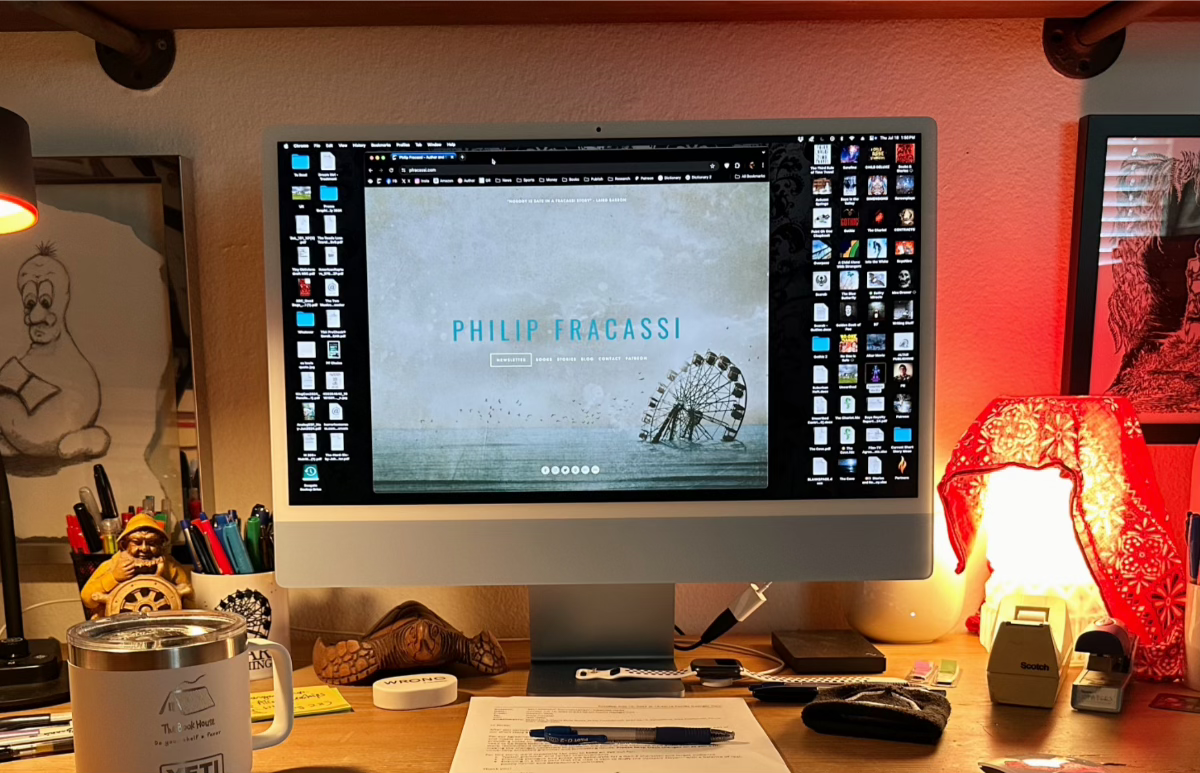
To learn more about Philip Fracassi and his books, visit his website at this link.